The Vanishing Art of Stillness: How We Learned to Fear Our Own Quiet
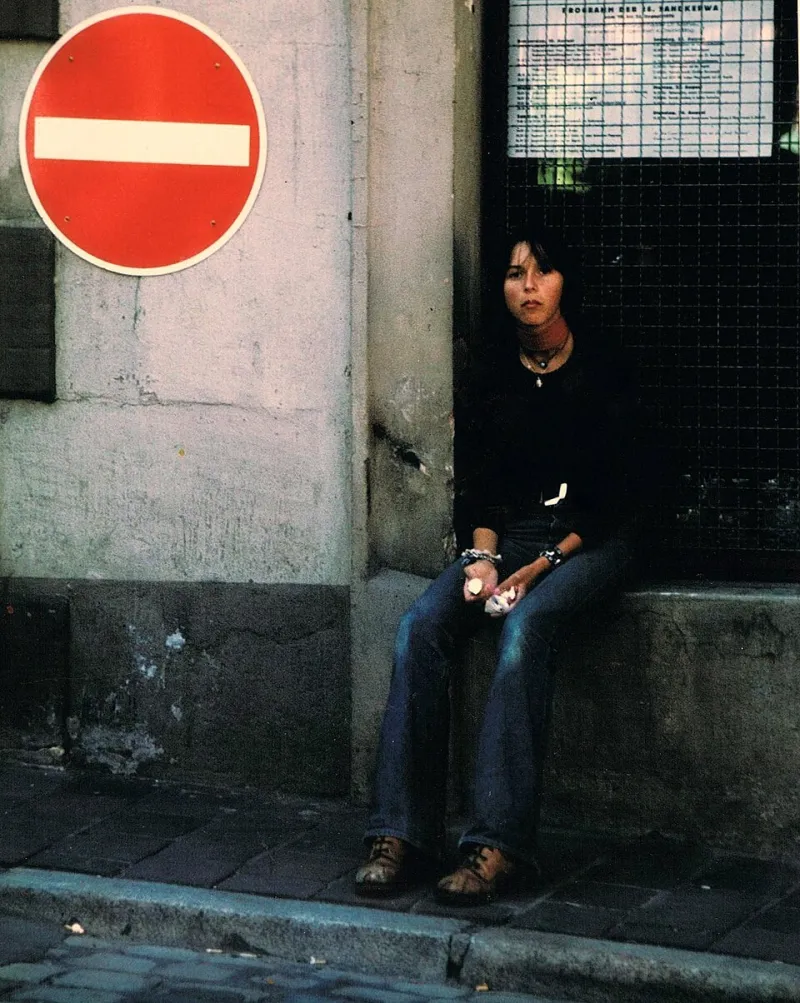
Photo: Stiller Beobachter from Ansbach, Germany, CC BY 2.0, via Wikimedia Commons
Somewhere in the past two decades, boredom acquired the status of an emergency. Not a mild inconvenience, not a temporary state to be waited out with patience, but a genuine crisis requiring immediate intervention. The evidence of this is visible everywhere: in the person who reaches for their phone before the elevator doors have finished closing, in the child handed a screen the moment restlessness appears, in the adult who has not sat in unoccupied silence — truly unoccupied, with no audio, no reading material, no task — in longer than they can remember.
We have engineered boredom out of our lives with extraordinary thoroughness. And in doing so, we may have engineered out something far more valuable.
A Brief History of Restlessness
It would be a mistake to assume that the discomfort of boredom is a modern invention. Human beings have always sought stimulation, always chafed against monotony. The ancient Stoics wrote extensively about the restless mind that cannot remain with itself; the medieval monks developed elaborate disciplines of contemplation precisely because stillness did not come naturally to them either.
What is distinctly modern — distinctly American, in many respects — is the conviction that this restlessness ought to be satisfied rather than examined. The culture of productivity that has defined American life since the Industrial Revolution carries within it an implicit moral judgment: the idle mind is not merely unproductive, it is suspect. Busyness signals virtue. Stimulation signals engagement. The person who confesses to having "nothing to do" is not reporting a pleasant state of rest; they are confessing to a kind of failure.
This cultural inheritance has been turbocharged by technology. The smartphone, in particular, represents the most complete solution to boredom ever devised — a device capable of filling any gap in attention with an essentially inexhaustible supply of novelty. That we carry it everywhere, that we consult it dozens of times per day, that we experience something approaching anxiety when it is unavailable, speaks to how thoroughly the premise has taken hold: silence is a void, and voids must be filled.
What We Lose in the Filling
The philosophical tradition offers a rather different account of what boredom is and what it is for. Blaise Pascal, writing in the seventeenth century, observed that "all of humanity's problems stem from man's inability to sit quietly in a room alone." This is not a trivial observation. Pascal was pointing toward something profound about the relationship between restlessness and self-knowledge — the way in which constant distraction functions as a flight from the self rather than an engagement with the world.
When we fill every quiet moment with input, we are not simply passing the time. We are actively preventing a particular kind of thinking from occurring. The philosopher William James described what he called "the stream of consciousness" — the slow, associative, often surprising movement of thought that happens when the mind is not directed toward a specific task. This is the thinking that connects disparate ideas, surfaces forgotten memories, generates unexpected insights, and allows the self to become, briefly, legible to itself.
Boredom, in its early stages, is the gateway to this state. The discomfort that arises in the first minutes of unoccupied attention is not evidence that nothing is happening. It is evidence that the mind is adjusting — releasing its grip on the external, beginning the slower, stranger work of internal navigation. To reach for the phone at precisely this moment is to abort a process before it has begun.
The Dignity of the Ordinary
There is a related loss worth naming, one that operates at a different register than cognitive function. It has to do with the experience of ordinary life — with the capacity to find meaning, texture, and even beauty in circumstances that do not announce themselves as remarkable.
The philosopher Simone Weil wrote about attention as a moral and spiritual act — a form of love, even, in its most refined expression. To attend to something is to honor it with your presence, to resist the pull toward whatever might be more stimulating, more novel, more immediately rewarding. In Weil's framework, the capacity for this kind of sustained, unglamorous attention is not merely a cognitive skill. It is a form of character.
Consider what this means in practical terms. The person who can sit with a single cup of coffee in the morning without also reading, scrolling, or listening to something is practicing a discipline that their restless counterpart is not. They are learning, in small increments, how to inhabit the present moment without demanding that it perform for them. They are developing, however modestly, a tolerance for the unremarkable — and in doing so, they are opening themselves to a kind of satisfaction that novelty-seeking consistently forecloses.
This is what the ancient traditions meant when they spoke of contentment as a virtue rather than a disposition. Contentment, in this sense, is not passive resignation. It is an active orientation toward the sufficiency of what is already present. It is the decision, made repeatedly and against the grain of habit, to stop treating the present moment as a problem to be solved with better entertainment.
The Courage to Sit Still
None of this is easy to practice in contemporary American life. The infrastructure of distraction is vast and deliberately designed to be compelling. The social signals that reward busyness and penalize stillness are deeply embedded. To choose, in this environment, to sit with discomfort rather than immediately relieve it requires something that deserves to be called courage — not dramatic courage, but the quieter kind that resists the path of least resistance.
What makes this particularly challenging is that the rewards of stillness are not immediate. The insight that emerges from an unoccupied hour does not announce itself as an insight while it is forming. The contentment that comes from learning to inhabit ordinary moments does not feel like contentment at first — it feels, for a while, like deprivation. The mind that has been habituated to stimulation experiences its absence as loss before it begins to experience it as freedom.
This is the essential paradox of restlessness: the cure for it is, at least initially, indistinguishable from the condition it is meant to relieve. To sit with boredom is to feel bored. There is no shortcut through this.
The Examined Life, Reconsidered
Socrates famously declared that the unexamined life is not worth living. It is worth noting that examination requires a particular condition: it requires quiet. It requires the willingness to turn attention inward, to sit with questions that do not resolve quickly, to resist the temptation of easy answers and easy distractions alike.
In a culture that has made distraction into an industry and restlessness into a default, the examined life has become genuinely countercultural. To choose stillness — to treat boredom not as an enemy to be defeated but as an invitation to be accepted — is to swim against a powerful current.
But the current is not the truth. The ordinary moment, attended to with patience and care, has always had more to offer than the perpetual novelty machine promises. We have simply, for a time, forgotten how to receive it.