Heirlooms of Hatred: The Wars We Inherit and the Courage to End Them

In the Appalachian hills of my grandmother's childhood, two families stopped speaking sometime before the Second World War. No one alive remembers the original offense. Yet when she died, her children knew—without being told—which pews to avoid, which names not to mention at Thanksgiving. The grudge had outlived its cause. It no longer needed one. It had become furniture.
This is how inherited resentment works. It arrives not as a wound but as a fact of the household, absorbed the way children absorb accents and table manners. We do not choose our enemies the way we choose our friends; more often, they are chosen for us, bequeathed in wills we never read.
The Son Commanded to Avenge
No figure in literature embodies the burden of inherited grievance more completely than Hamlet. His father's ghost does not merely report a murder—it issues a demand. "Remember me," the ghost says, and in that command lies the whole architecture of inherited hatred: memory recast as obligation, grief weaponized into assignment.
What makes the play devastating is that Hamlet hesitates, and we spend five acts watching the cost of both obedience and refusal. Had he simply let the matter rest, the court of Denmark might have continued in its quiet corruption. But had he never been commanded at all, eight lives would have been spared by the final scene. Shakespeare offers no verdict. He only shows us the body count of a feud that was never the prince's to begin with.
American history carries its own versions. The Hatfields and McCoys turned a disputed hog and a romance across enemy lines into a twenty-year blood feud that required state militias to suppress. The Hatfield-McCoy feud is now a tourist attraction—a heritage brand, complete with annual reunions where the descendants of both families gather in mock reconciliation. We have, in a sense, commodified the ending of grudges while rarely practicing it.
Fidelity Misunderstood
The moral confusion at the heart of inherited resentment is this: we mistake carrying the grudge for honoring the dead. To forgive feels like a betrayal of the grandmother who was cheated, the grandfather who was wronged, the community that was slighted. Their grievance deserves a guardian, we tell ourselves, and we are the last of the line.
But there is a category error hiding in this devotion. An injustice and a grudge are not the same thing. The injustice belonged to the person who suffered it; the grudge is only our rehearsal of it. When we take up our ancestors' resentments, we are not protecting them—we are performing them, and often poorly, without the context or the pain that gave the original anger its moral weight.
Consider what we would never accept in the other direction. If a stranger wronged our great-grandfather, we would not feel entitled to demand restitution from that stranger's great-grandchildren. Yet inherited grudges do exactly this: they assign present-day people the debts of the past, collected by people who never lent a thing.
What the Dead Actually Ask
There is a quieter reading of the ghost's command. "Remember me" need not mean "avenge me." It may only mean: do not let what happened to me become meaningless to you. Memory and warfare are separable. We can hold the history of a wrong firmly in view—the family estrangement, the racial wound, the regional grudge, the inherited suspicion between communities—without accepting the assignment of continuing it.
The Stoics understood that we are responsible for our judgments, not our inheritances. Epictetus, born enslaved, had every reason to carry a grudge against the world and chose instead to concern himself with what lay within his power. Marcus Aurelius, ruler of an empire constantly at war, wrote to himself each morning: begin the day by telling yourself you will meet the meddling, the ungrateful, the arrogant—and resolve to be harmed by none of it. Neither man confused acknowledging injury with perpetuating it.
The Courage of the Last Combatant
Ending a war is not the same as forgetting it, and this is where the popular caricature of forgiveness fails. The person who lays down an inherited grudge does not erase the family history. She simply declines to be its active combatant. She can tell the story truthfully—yes, they were wronged, yes, it was unjust—while refusing to let the wrong dictate whom she may speak to, sit beside, or love.
This takes a particular kind of nerve, because the grudge is not only ours. Refusing it means disappointing the dead and sometimes the living—mothers who expect loyalty, communities that reward old hatreds dressed as heritage. There is a social cost to being the generation that says: the war ends here. Peacemakers within feuding families often find themselves treated as traitors before they are treated as heroes, if they are ever treated as heroes at all.
But consider what is actually being handed to the next generation if we do not stop. Every grudge we carry becomes a lesson. Children learn not what we say about forgiveness but what we practice in the kitchen and the church parking lot. To keep the feud is to enroll them in it without their consent—the very thing that was done to us.
Perhaps this is the only real inheritance worth passing down intact: the ability to distinguish between honoring the past and obeying it. The dead cannot release us from their wars. Only we can. And there is a strange, hard dignity in being the one who says of an old battle: this one ends with me. Not because the wrong was small. Because we finally decided that our children deserve a future with fewer ghosts in it.
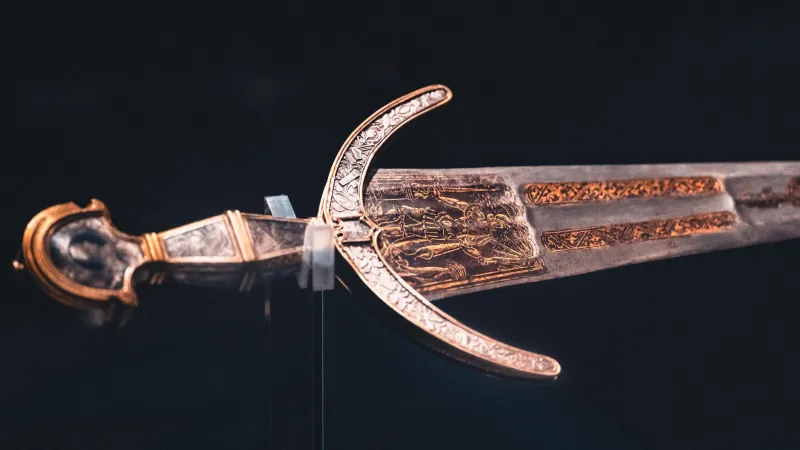
The sword, as any honest smith will tell you, is finished when it is laid down—not when it is sharpened for the next hand.