The Self as Spreadsheet: How the Pursuit of Personal Growth Became a Trap

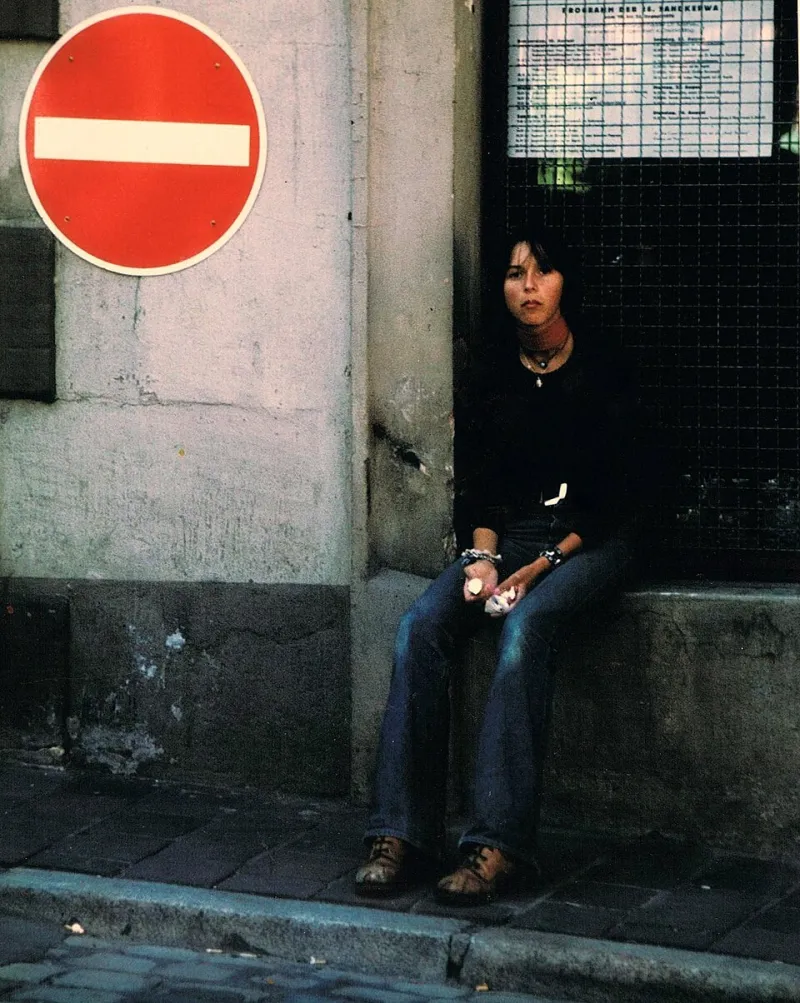
Photo: Jiafei Slay Queen, CC0, via Wikimedia Commons
Socrates famously declared that the unexamined life is not worth living. It is worth pausing to consider what he did not say. He did not say that the examined life should be logged, tracked, reviewed quarterly, and optimized for compounding returns. Yet here we are — a culture that has taken one of antiquity's most searching philosophical imperatives and quietly converted it into a productivity system.
The examined life, in its original form, was an act of humility. It was the willingness to sit with difficult questions about virtue, justice, and the nature of the good — not to answer them efficiently, but to live inside them honestly. It was uncomfortable by design. What we have built in its place is something far more comfortable, and far less honest.
The Colonization of Introspection
The modern self-improvement industry is not, at its core, a philosophical enterprise. It is a commercial one. And yet it has become extraordinarily skilled at borrowing the language of philosophy — mindfulness, intentionality, purpose, values — while quietly evacuating those words of their original weight.
Consider the morning routine, which has become one of the era's most fetishized rituals. Across podcasts, bestsellers, and social media feeds, the early hours have been repackaged as prime real estate for self-engineering. Journaling, meditation, gratitude practices, cold exposure, goal visualization — each element slotted into a sequence with the precision of a manufacturing process. The implicit promise is consistent: follow the system, and you will become a better version of yourself.
There is nothing inherently wrong with structure, of course. Discipline has always been a companion to wisdom. But there is a profound difference between the discipline that creates space for genuine reflection and the discipline that replaces genuine reflection with the appearance of it. When journaling becomes a checkbox, when meditation becomes a biometric, when reading Marcus Aurelius becomes a line item on a personal development plan, something essential has been lost. The examined life has become another project to manage.
The Paradox at the Center
Philosophy, properly understood, resists systematization. This is not a flaw but a feature. The questions that matter most — How should I live? What do I owe others? What constitutes a good character? — do not yield to five-step frameworks or habit stacking. They require what the ancient Greeks called aporia: a state of productive confusion, of not-knowing that precedes genuine understanding.
The optimization mindset cannot tolerate aporia. It is, by its nature, a framework for eliminating uncertainty and inefficiency. Applied to the inner life, it produces a peculiar kind of person: someone who can articulate their values with great fluency but has never genuinely wrestled with whether those values are correct. Someone who meditates daily but has not sat with a genuinely disturbing question in years. Someone who reads widely in philosophy but approaches each book as a source of applicable insights rather than as an invitation to be unsettled.
This is not growth. It is the simulation of growth — and the simulation is, in many ways, more dangerous than simple ignorance, because it forecloses the very discomfort that genuine self-examination requires.
When Becoming Crowds Out Being
There is a deeper problem still. The relentless orientation toward self-improvement is, at its root, a refusal to accept the present self as sufficient. Every system, every routine, every carefully curated habit is premised on the belief that who you are today is inadequate — a rough draft to be revised, a baseline to be exceeded.
This premise is not philosophically neutral. It carries with it a particular vision of human life: that we are projects, perpetually under construction, valuable primarily in proportion to our rate of improvement. It is a vision that borrows heavily from economics and engineering, and it is a vision that most serious philosophical traditions would recognize as impoverished.
The Stoics, for instance, did not counsel perpetual self-reinvention. They counseled attention — a careful, unflinching awareness of one's actual thoughts, impulses, and judgments, not in order to optimize them, but in order to align them with reason and virtue. The goal was not a better version of oneself. The goal was to live well, now, with the self one actually has. Similarly, contemplative traditions across cultures have consistently pointed toward presence — not as a productivity strategy, but as the fundamental condition of a meaningful life.
When becoming perpetually crowds out being, we do not arrive at wisdom. We arrive at exhaustion dressed in the language of progress.
Reclaiming the Examined Life
None of this is an argument against self-reflection, or even against the genuine desire to grow. It is, rather, an argument for distinguishing between two very different relationships with the inner life.
The first is the relationship of the manager: surveying, assessing, identifying gaps, deploying resources, measuring outcomes. This relationship treats the self as a system to be improved, and it is the dominant mode of contemporary self-help culture.
The second is the relationship of the witness: present, patient, willing to be surprised, willing to be wrong, willing to sit with what is true rather than what is useful. This is the relationship that philosophy, at its most serious, has always cultivated. It is slower, less legible, and far less marketable. It produces no dashboards, no before-and-after narratives, no five-point frameworks. What it produces, over time, is something rarer: a person who has genuinely reckoned with themselves.
The examined life was never meant to be a project with deliverables. It was meant to be a practice of honest attention — sometimes clarifying, sometimes disorienting, always more honest than the alternative. To live it well is not to optimize. It is to remain, in some fundamental sense, genuinely open to the questions that do not resolve.
Socrates died for that openness. The least we can do is resist the temptation to put it on a habit tracker.